Basic Mountaineering Course in India: Gateway to Adventure and Skills

With their snow-capped peaks and challenging terrain, the Himalayas beckon adventure seekers. A Basic Mountaineering Course (BMC) is an essential first step if you plan on scaling these heights. A BMC in India is an exciting endeavour that has many benefits. In this comprehensive guide, you’ll find out what a BMC entails, what it offers, and how to get started. Along with the Basic Mountaineering Course details,  you will also get to know the number of top institutes of Mountaineering courses in this article. Basic Mountaineering Course participants will gain the mountaineering skills and knowledge necessary to trek safely through the mountains and climb safely. The typical course duration is 26 to 28 days, during which you will cover various mountaineering aspects.

Topics covered in the Basic Mountaineering Course (BMC)

Basic Mountaineering Course (BMC) covers a wide range of topics including:

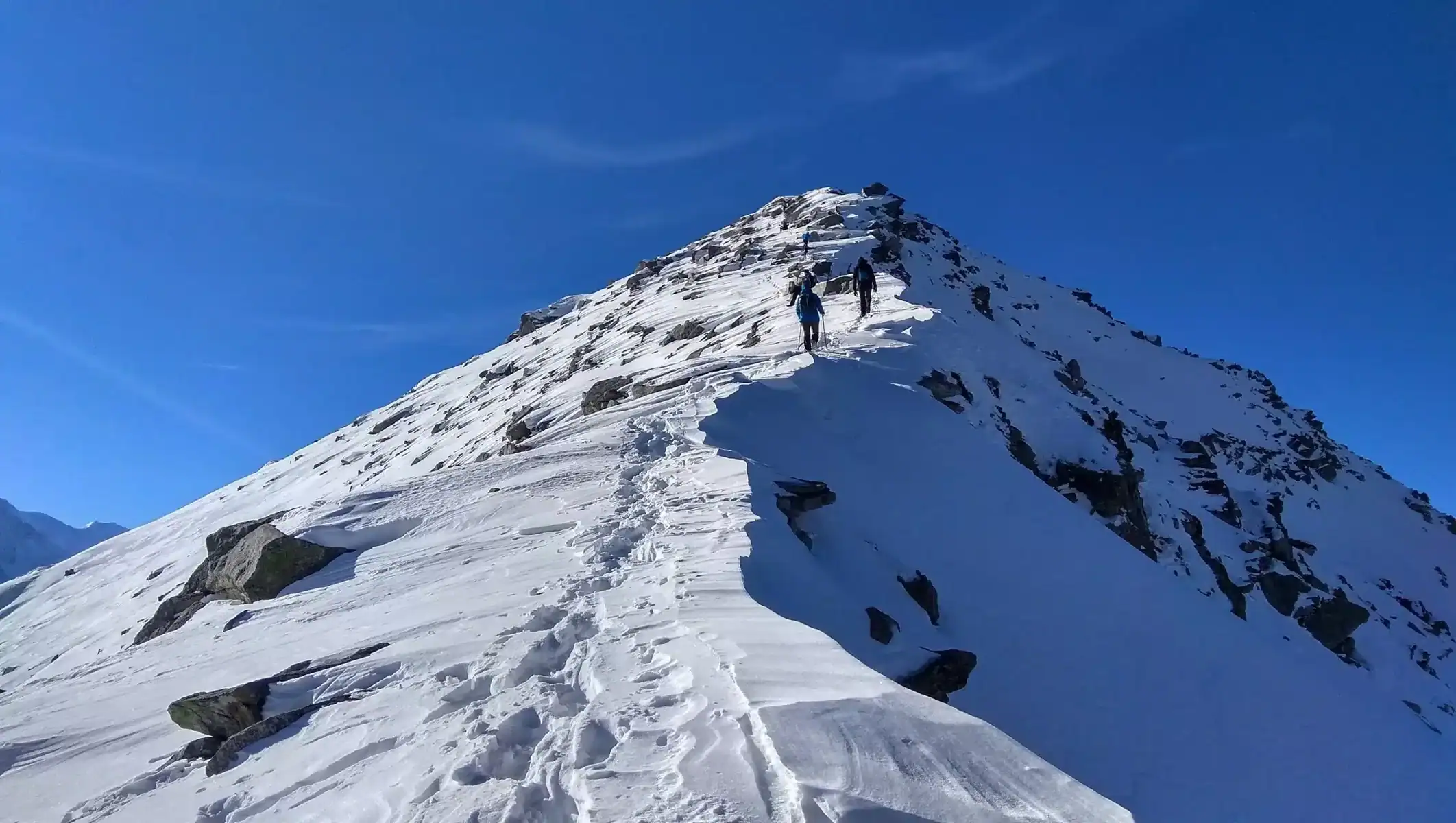
  • Mountaineering Techniques– Participants are taught rock climbing, ice climbing, and snow crafting techniques. Get familiar with basic climbing techniques such as rappelling, belaying, and anchoring. Gain a thorough understanding of crampon use, self-arrest techniques, and avalanche awareness to navigate snowy and icy terrain.
  • Safety Protocols – Various safety measures, including rope management, belaying, and rescue operations, are emphasised.
  • Navigation – Using a map and compass, GPS devices, and interpreting weather patterns to navigate the mountain terrain are all skills you can learn in this course.
  • Camping – Develop practical skills in tent setting, cooking at high altitudes, and proper camp hygiene.
  • First Aid – An essential course component is basic first aid training specific to emergencies in the mountain’s remote location.
  • Physical Training – Gain the strength and stamina required to manage difficult treks and climbs.

Advantages of Completing Basic Mountaineering Courses

Below, we are mentioning the benefits of taking a Basic Mountaineering Course:

  1. Skill Development – Learn the fundamentals of mountaineering, which lay the groundwork for future exploration and adventure. Acquire the skills and information required for mountaineering on a practical level.
  2. Safety Awareness – Understand how to assess risks, handle emergencies, and ensure that you and others are safe in mountain environments.
  3. Confidence Building – By overcoming obstacles and pushing your boundaries, you can develop confidence that you can use in all facets of your life, not just mountaineering.
  4. Networking Opportunities—Connect with experienced trekkers and other enthusiasts to grow your network in the outdoor adventure community.
  5. Preparation for Advanced Courses – Completing a BMC opens doors to more advanced mountaineering courses and expeditions, allowing you to pursue your passion further.

How to Take a Basic Mountaineering Course in India

  1. Choose Your Institute: Several reputable mountaineering institutes offer BMCs in India. Popular options include: 
    • Himalayan Mountaineering Institute (HMI), Darjeeling
    • Atal Bihari Vajpayee Institute of Mountaineering and Allied Sports (ABVIMAS), Manali, Himachal Pradesh
    • Nehru Institute of Mountaineering (NIM), Uttarkashi, Uttarakhand
    • Jawahar Institute of Mountaineering (JIM), Pahalgam, Jammu & Kashmir
    • National Institute of Mountaineering and Allied Sports (NIMAS), Arunachal Pradesh
  2. Check Eligibility: Most institutes mandate that applicants be physically healthy and between 18 and 45. Some could need other qualifications, such as a medical certificate. Before applying, make sure you meet these requirements.
  3. Apply and Register:  BMCs often have a limited number of seats and strong demand, so it’s best to apply well in advance. For application details, go to the website of the selected institute or get in touch with them. Prepare to turn in the course fee, the completed application, and the required paperwork.
  4. Training and Preparation: The BMC requires intense physical preparation. Before the course starts, think about beginning your exercise regimen. Since mountaineering involves a lot of physical exertion, start by building your strength, flexibility, and endurance.
  5. Attend the Course: Once registered, give the learning process your full attention. Attend classes, make inquiries, and practice your abilities.

How to Register for Basic Mountaineering Course (BMC)

  1. Choose Your Institute:
      1. Several reputable mountaineering institutes offer BMCs in India. A list of institutes is provided above for your reference.
      2. Research the Institute’s Website:
      3. Each institute will have its website with detailed information about their BMC program, including:
      4. Course Dates and Schedule
      5. Eligibility Requirements (age, physical fitness, medical certificate)
      6. Application Process and Deadlines
      7. Course Fees and Payment Options
      8. Required Gear and Equipment List
  2. Apply and Register:
    1. Once you’ve chosen your institute, visit their website and look for the BMC application section. You’ll likely find an online application form or downloadable application documents. The application process might involve:
    2. Filling out the application form with your personal details and mountaineering experience (if any)
    3. Submitting necessary documents like photocopies of ID proof, age proof, and a medical certificate (if required)
    4. Paying the course fee online or through a designated method

About Author

founder Trekup India Preetam
Preetam Singh Rawat (Founder)

The person behind this trekking organization is someone who’s spent over a decade – 12 years, to be exact – living and breathing the mountains. With multiple high altitude summits under his belt (we’re talking 6000 to 7000 meter peaks), he’s not just experienced – he’s the real deal.

But what really sets him apart is the sheer number of treks he has guided. He has led over 200 Himalayan expeditions, including well known routes like Bali Pass, Buran Ghati, Rupin Pass, Pin Bhabha, Stok Kangri, and Black Peak. Not just once, but multiple times. So yeah, when it comes to the Himalayas, he knows every twist in the trail and every story the mountains have to tell.

Got questions or want to get in touch? Write to Preetam at preetam@trekupindia.com. He’s always happy to chat about treks, answer your questions, or help you prepare for your next big adventure.

Share this article

Facebook
Twitter
LinkedIn
WhatsApp
Threads
Tumblr
Reddit
Table of Contents
Close

Dates For Upcoming Treks

Want To Trek Like Pro?

Basically, watch these videos if you want to trek the same way professional trekkers do and make your skills better. These videos contain useful tips and techniques to further improve your trekking skills itself. These videos actually help both new and experienced trekkers improve their trekking skills. These videos definitely provide useful tips that make your trek better. We are seeing that these videos by Trekup India experts will only help you make your trekking skills better.

Know Everything About Acute Mountain Sickness

Acute Mountain Sickness occurs when people trek to high altitudes above 8,000 feet. This condition itself develops further due to reduced oxygen levels at such heights. Basically, as you go higher up, the air pressure and oxygen levels decrease, which causes the same problem. Acute Mountain Sickness surely causes headache, nausea, vomiting, and dizziness in affected persons. Moreover, peoples also experience difficulty in sleeping during this condition. To avoid mountain sickness, you should actually trek up slowly to higher altitudes. To learn further about this condition itself, watch the videos by Trekup India.