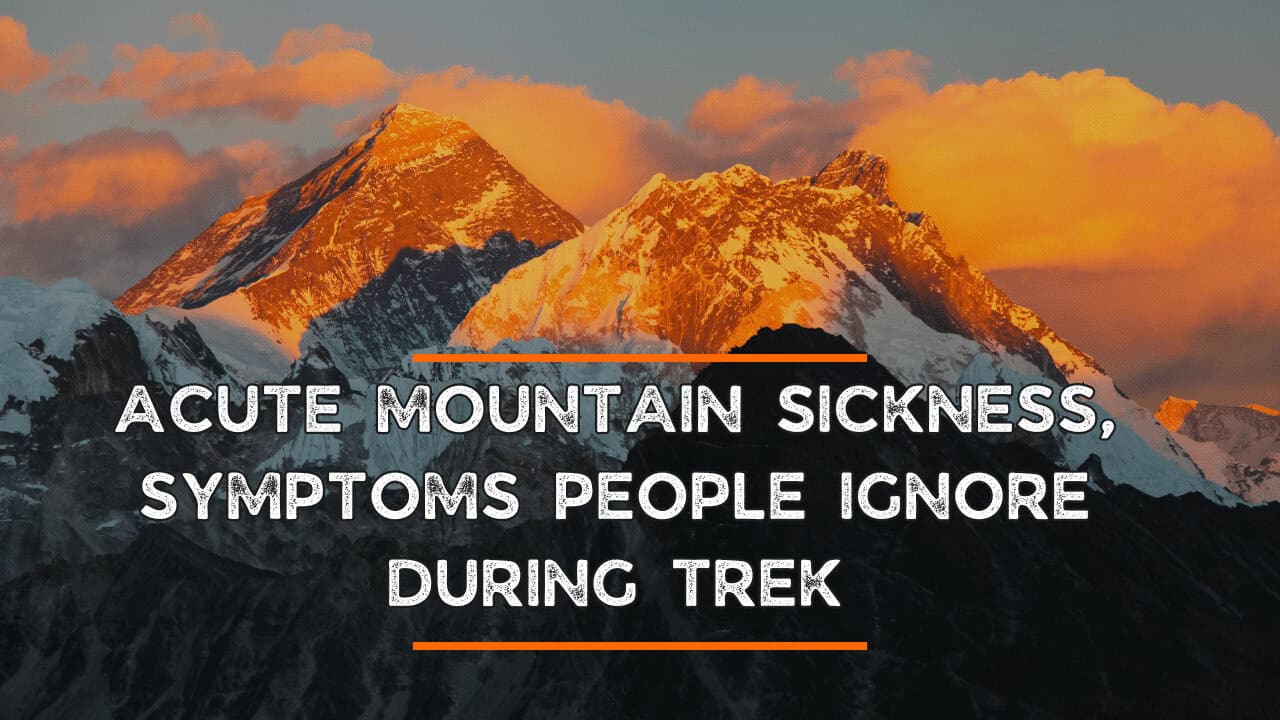
Altitude Sickness Symptoms in Trekking: AMS, HAPE & HACE Explained
Trekking at high altitudes promises breathtaking views, thrilling adventure and an often unanticipated risk. Trekup India believes that education is the first line of defence against these dangers; knowing about High-Altitude Pulmonary Edema (HAPE), Acute Mountain Sickness (AMS), and High-Altitude Cerebral Edema is crucial for staying safe during trekking at higher altitudes.
What Causes High-Altitude Illness?
At altitudes above 2,500 metres (8,200 feet), oxygen levels begin to diminish as you climb higher gradually, and it takes your body time to adapt, as breathing thinner air requires some adjustment from you. Failure to adjust may lead to altitude-related medical symptoms (AMS or even more serious, HAPE or HACE). If this does happen to you, serious consequences could occur, such as acute respiratory distress syndrome.
1. Early Warning Signs of Acute Mountain Sickness
The early warning signs typically begin 6-24 hours after ascending to an altitude between 2,500 and 3,001 meters.
Common symptoms: persistent headache, light-headedness or dizziness
Fatigue even after rest, loss of appetite, nausea or vomiting and sleeping problems, plus breathing issues at minimum activity level, can all indicate fatigue.
Stop ascending if any of these symptoms appear, rest and monitor at the same elevation, and light exercise/hydration to help resolve symptoms as soon as possible.
2. High-Altitude Pulmonary Edema: Fluid in the Lungs
This condition typically appears 2-4 days following rapid ascent.
Symptoms: Increased Shortness of Breath Even While Relaxed
Your symptoms could include a wet and gurgling throat, chest tightness or congestion.
Blue lips and fingernails could be a telltale sign of oxygen deficiency.
High pulse rate or rapid heartbeat
Trekup India Tip:
HAPE can be life-threatening. Rapid descent (at least 500 to 1,000 meters per day) may be the only practical solution; oxygen therapy or medications such as Nifedipine may assist, yet evacuation must not be compromised.
3. High-Altitude Cerebral Edema: Brain Swelling
Most often occurs above 4,000 metres but may appear below.
Symptoms:
A severe and splitting.
Trekup India Tip:
HACE should be treated as a medical emergency, and descent should occur immediately with dexamethasone administered under supervision, plus oxygen if available, if oxygen tanks aren’t. A trekker experiencing HACE should never be left alone on an expedition.
What Trekup India Recommends You Carry
Pulse oximeter: Used to monitor blood oxygen saturation.
Diamox (Acetazolamide): can help aid acclimatisation. Please consult with a healthcare provider.
Dexamethasone: an emergency steroid to use under medical guidance only.
Nifedipine: for treating HAPE.
Portable Oxygen Cylinders: Portable oxygen cylinders are perfect for trekkers tackling high-altitude terrain.
Plan of Evacuation: For best results, always trek with an experienced leader.
Conclusion
Travelling at altitudes above 4,000 feet can be a fantastic experience, provided it is done responsibly and mindfully. Anyone may become susceptible to altitude-induced illnesses like HAPE, HACE or AMS, and we must recognise their symptoms early and take necessary action. Trekup India trek leaders are experts at handling altitude medical emergencies, and all our treks include buffers to facilitate acclimatisation, medical checkups, and briefing sessions.
About Author
Anoop Rawat (Admin TrekUp India)
Anoop has worked for 5 years as a Trek Leader with TrekUpIndia, leading numerous treks across the diverse and challenging terrains of Uttarakhand and Himachal Pradesh. He holds a degree in Geology with a specialization in Geographic Information Systems (GIS) from UPES Dehradun. During his academic years, he actively applied his classroom knowledge in the field—most notably by contributing to a glacier research project on the Jundar Glacier in the Har Ki Dun Valley, Uttarakhand. Write Anoop at anoop@trekupindia.com
Share this article
Dates For Upcoming Treks
Want To Trek Like Pro?
Basically, watch these videos if you want to trek the same way professional trekkers do and make your skills better. These videos contain useful tips and techniques to further improve your trekking skills itself. These videos actually help both new and experienced trekkers improve their trekking skills. These videos definitely provide useful tips that make your trek better. We are seeing that these videos by Trekup India experts will only help you make your trekking skills better.
Know Everything About Acute Mountain Sickness
Acute Mountain Sickness occurs when people trek to high altitudes above 8,000 feet. This condition itself develops further due to reduced oxygen levels at such heights. Basically, as you go higher up, the air pressure and oxygen levels decrease, which causes the same problem. Acute Mountain Sickness surely causes headache, nausea, vomiting, and dizziness in affected persons. Moreover, peoples also experience difficulty in sleeping during this condition. To avoid mountain sickness, you should actually trek up slowly to higher altitudes. To learn further about this condition itself, watch the videos by Trekup India.