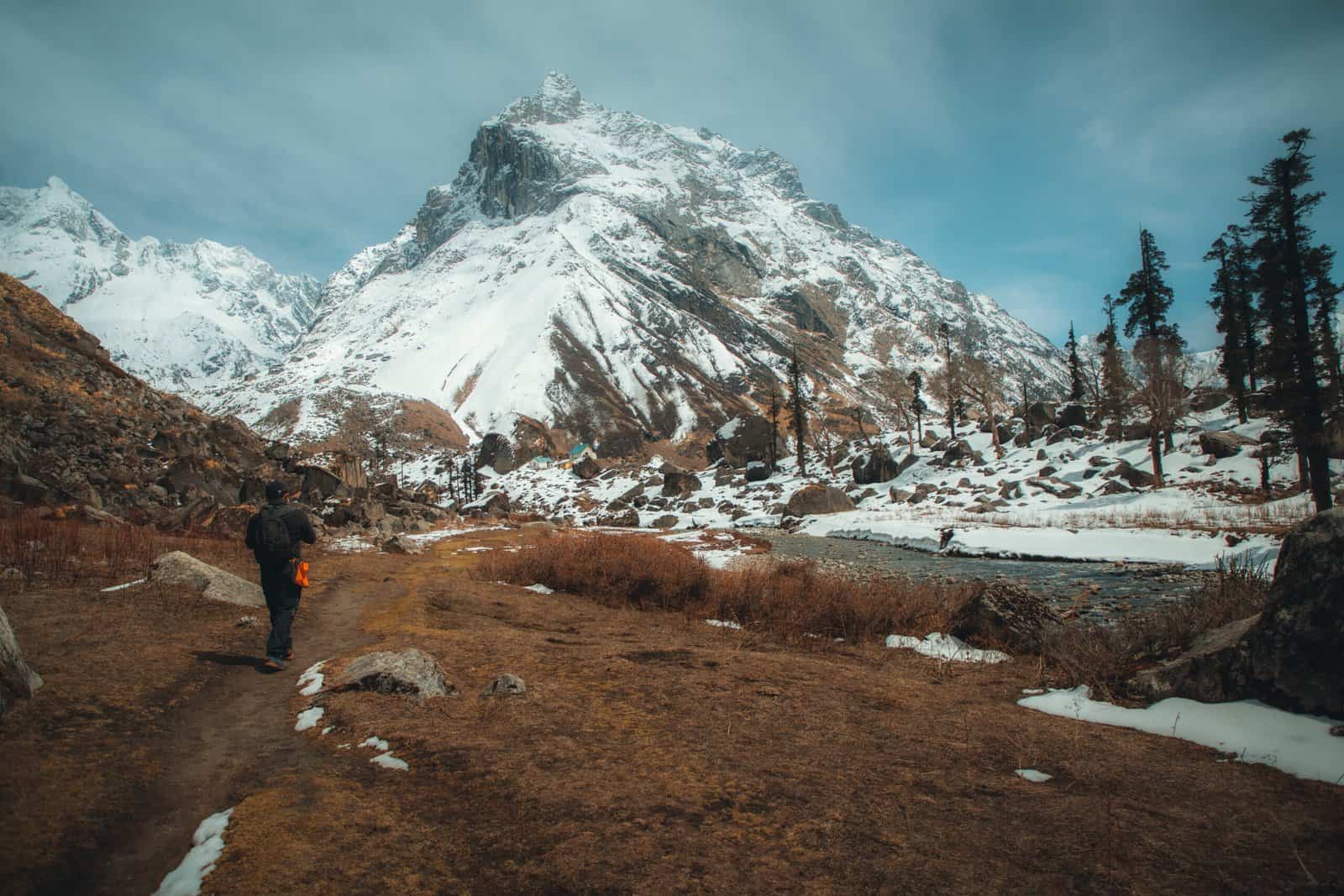
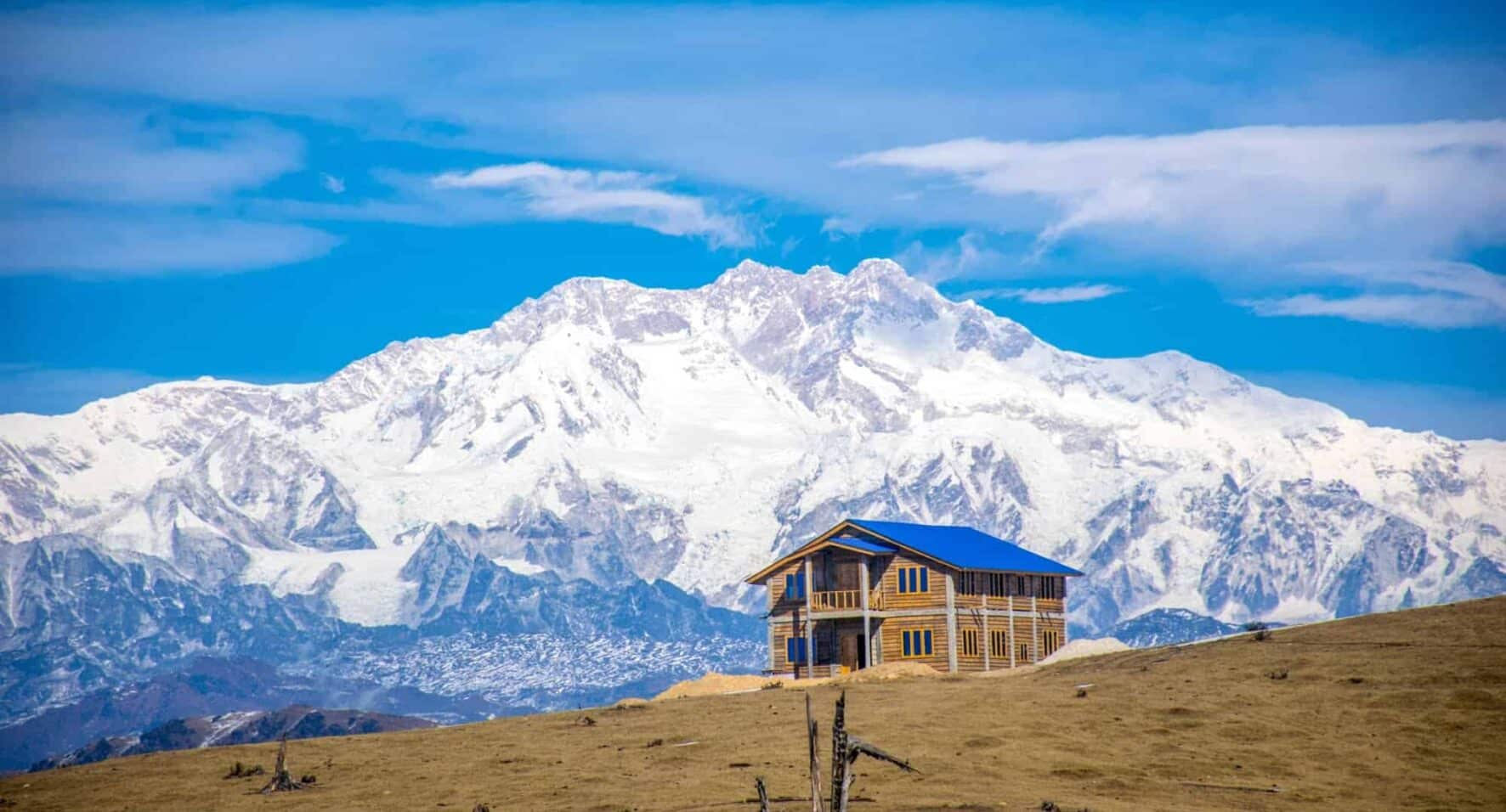
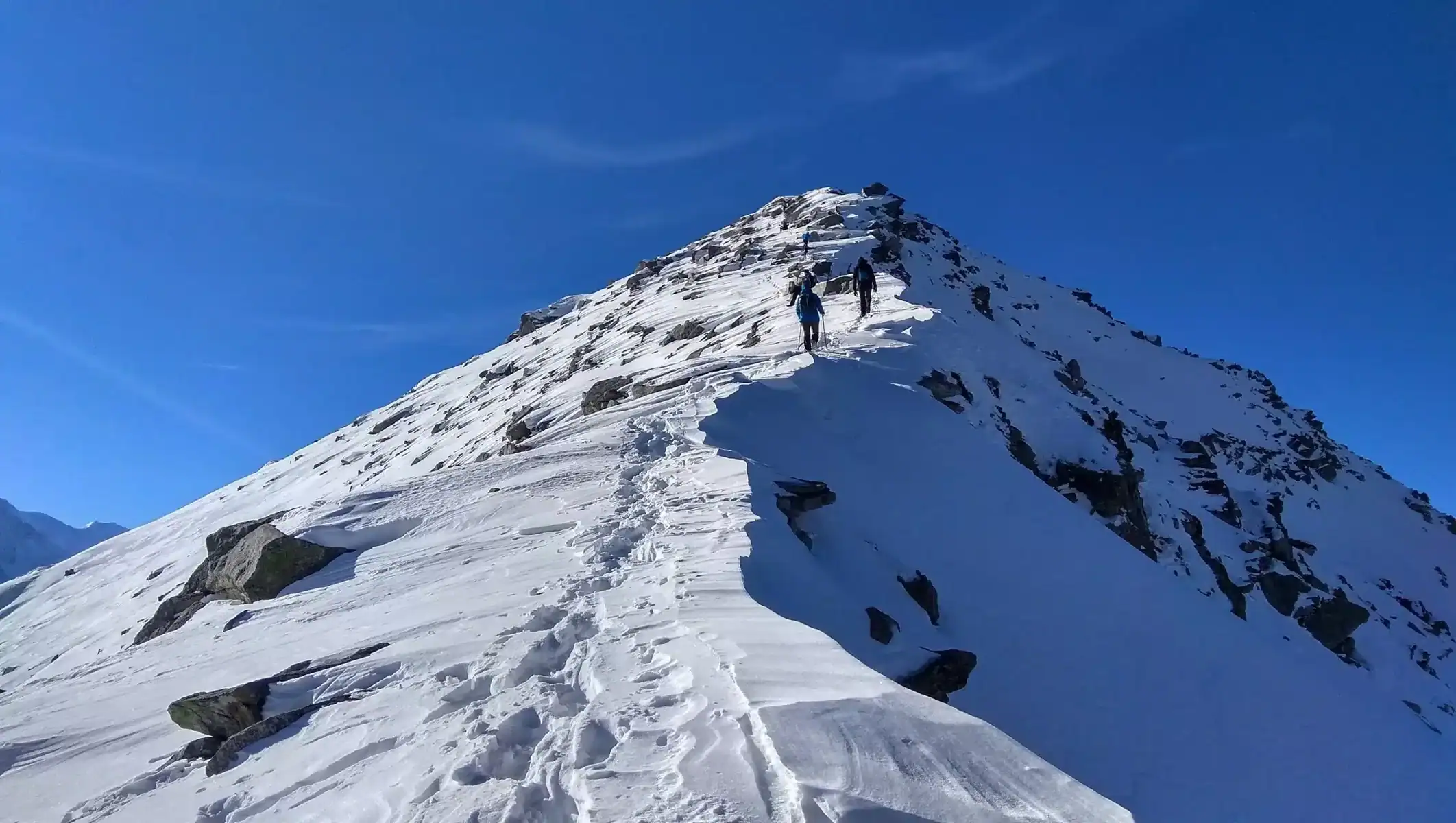
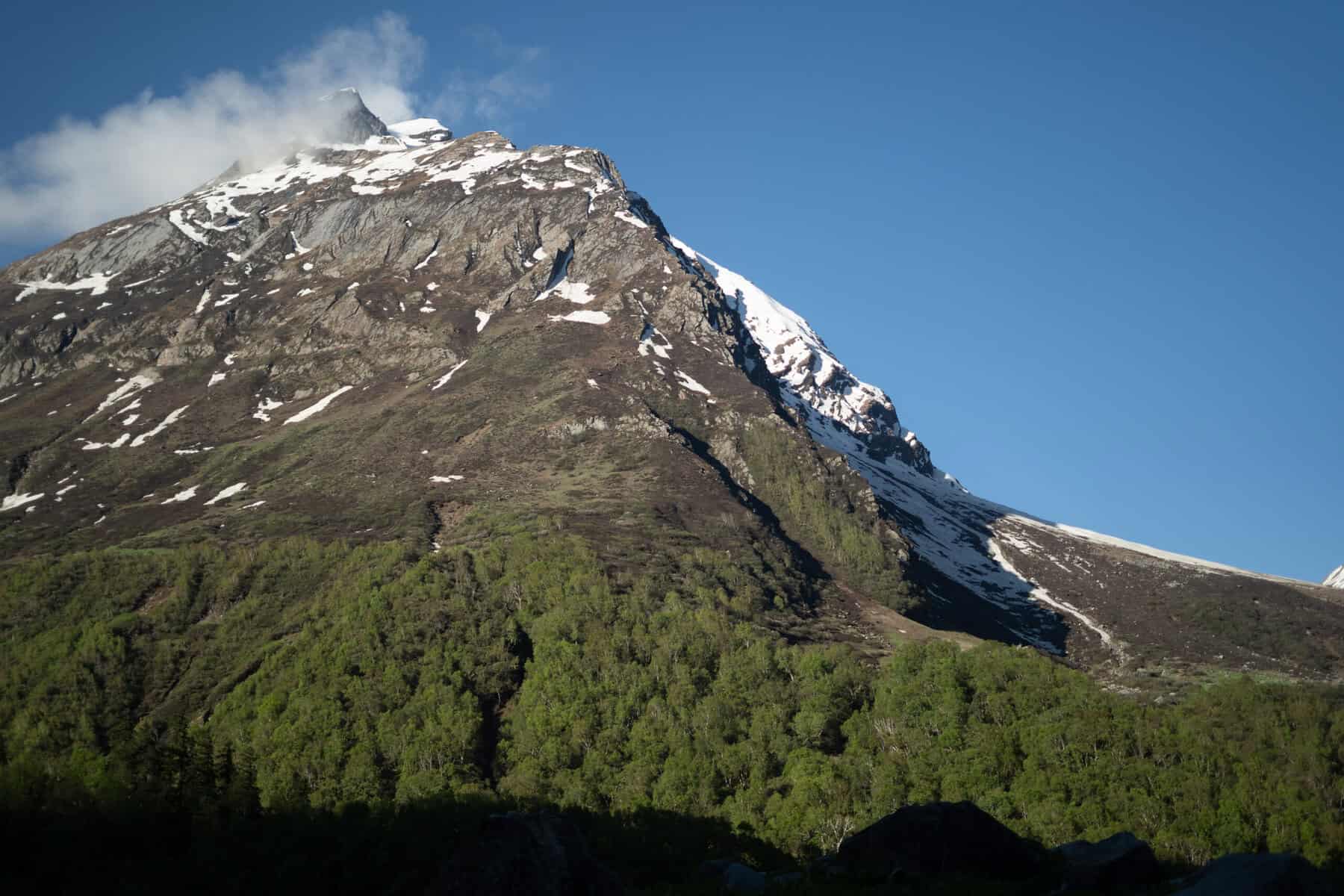
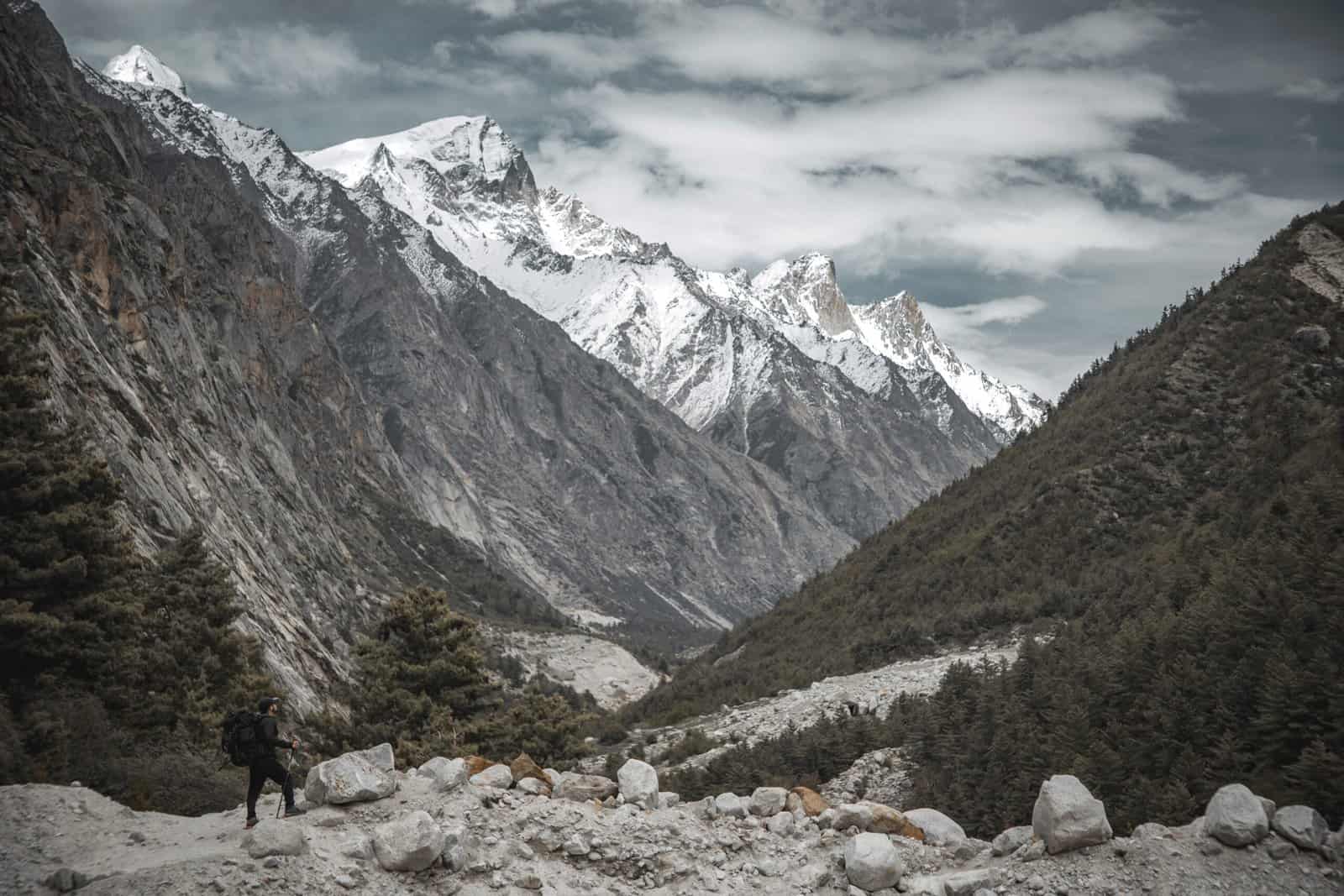
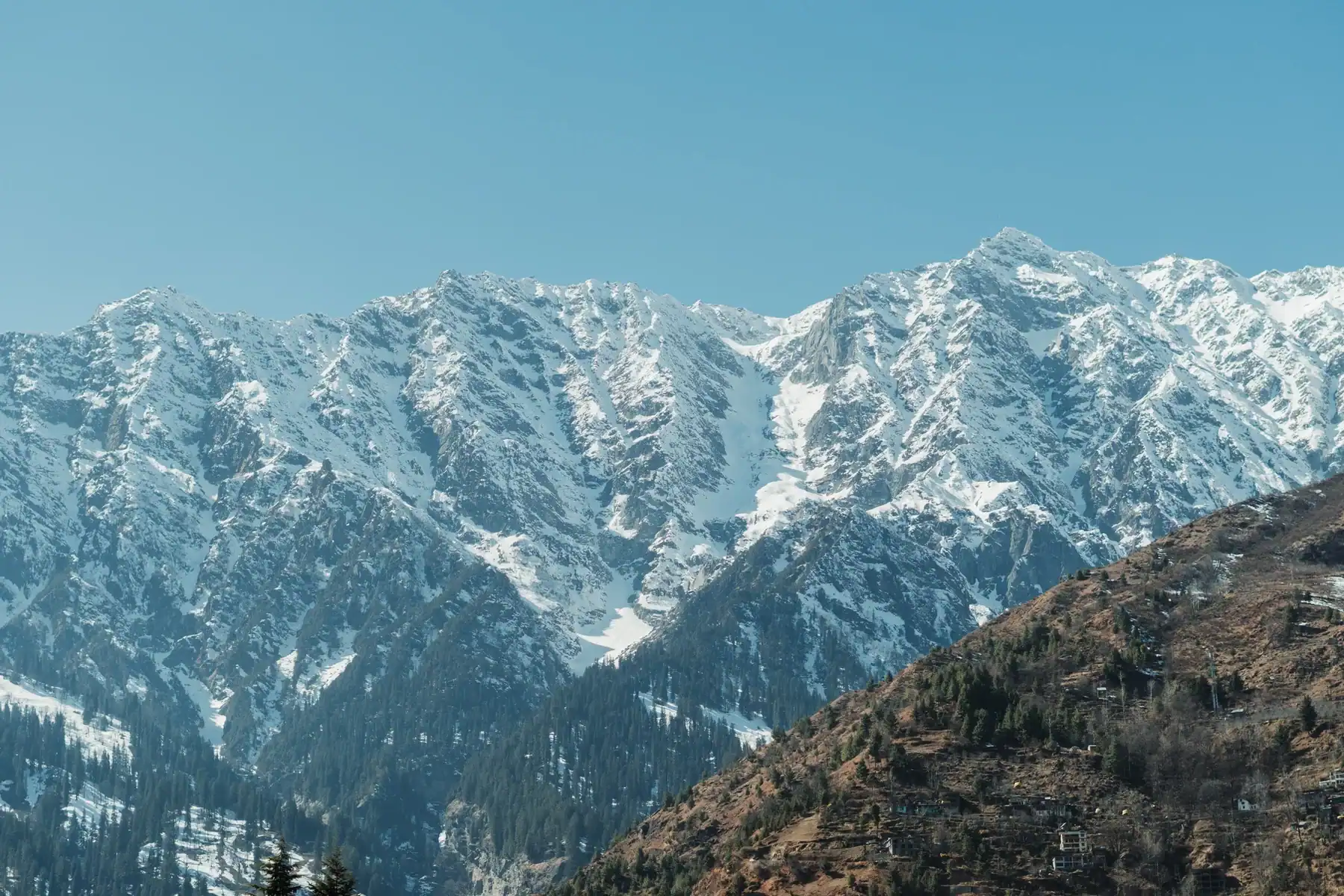
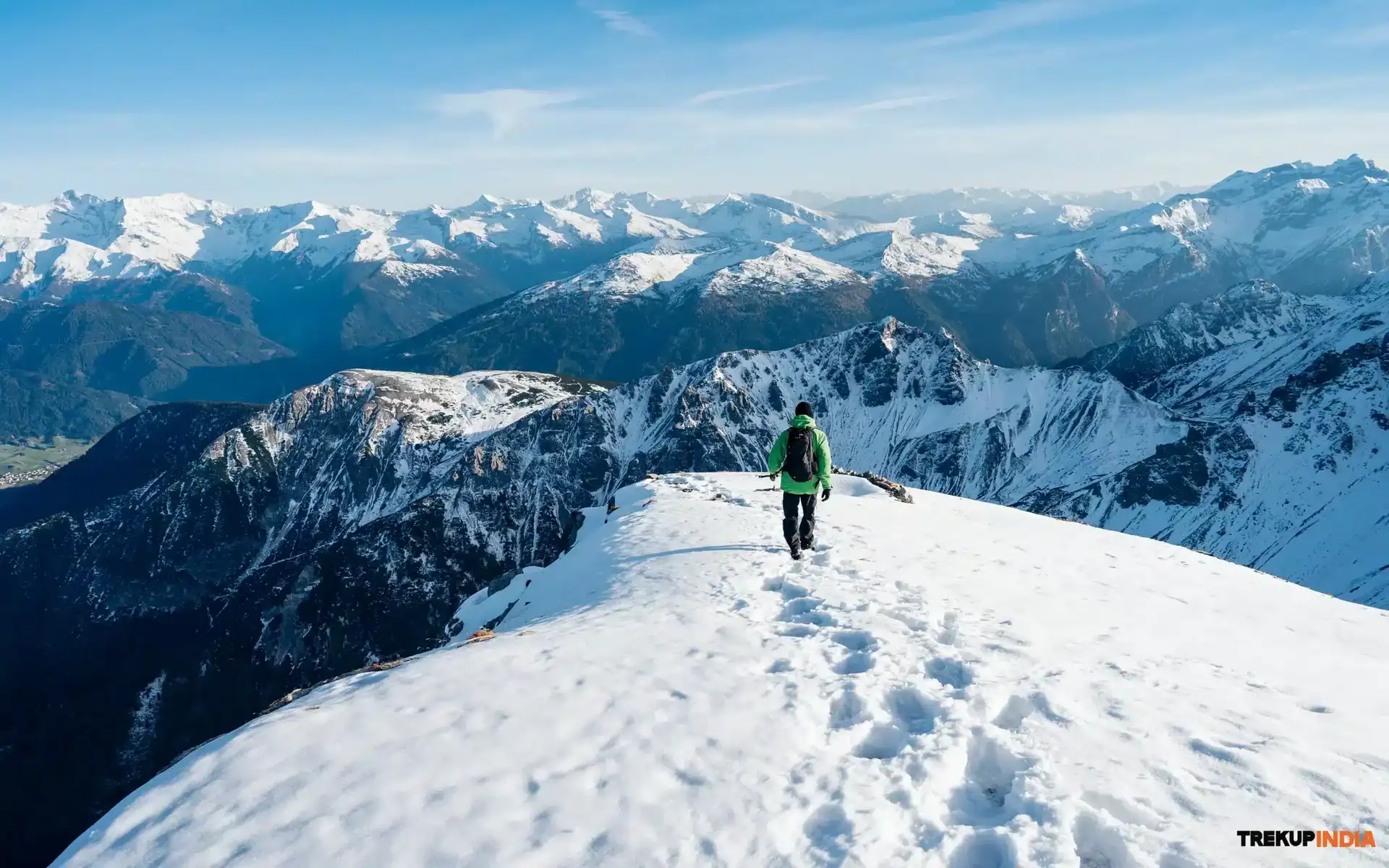
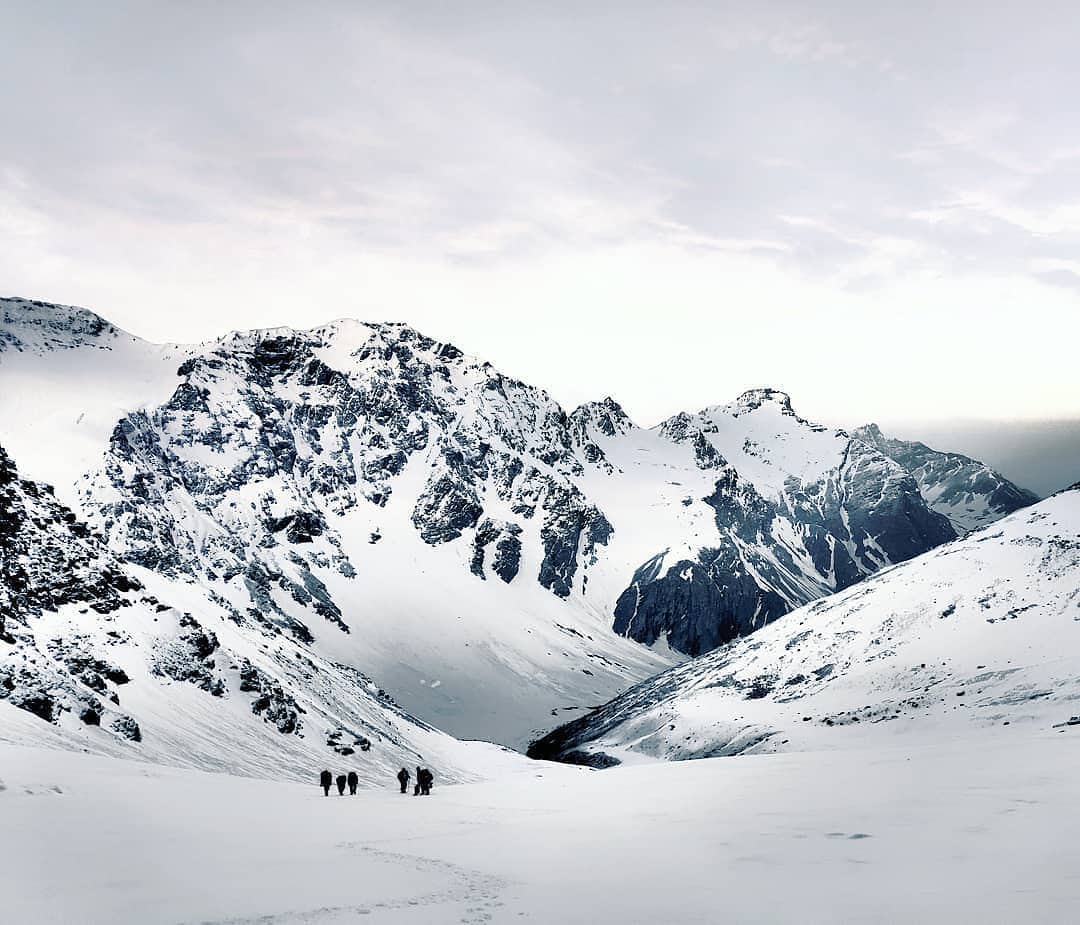
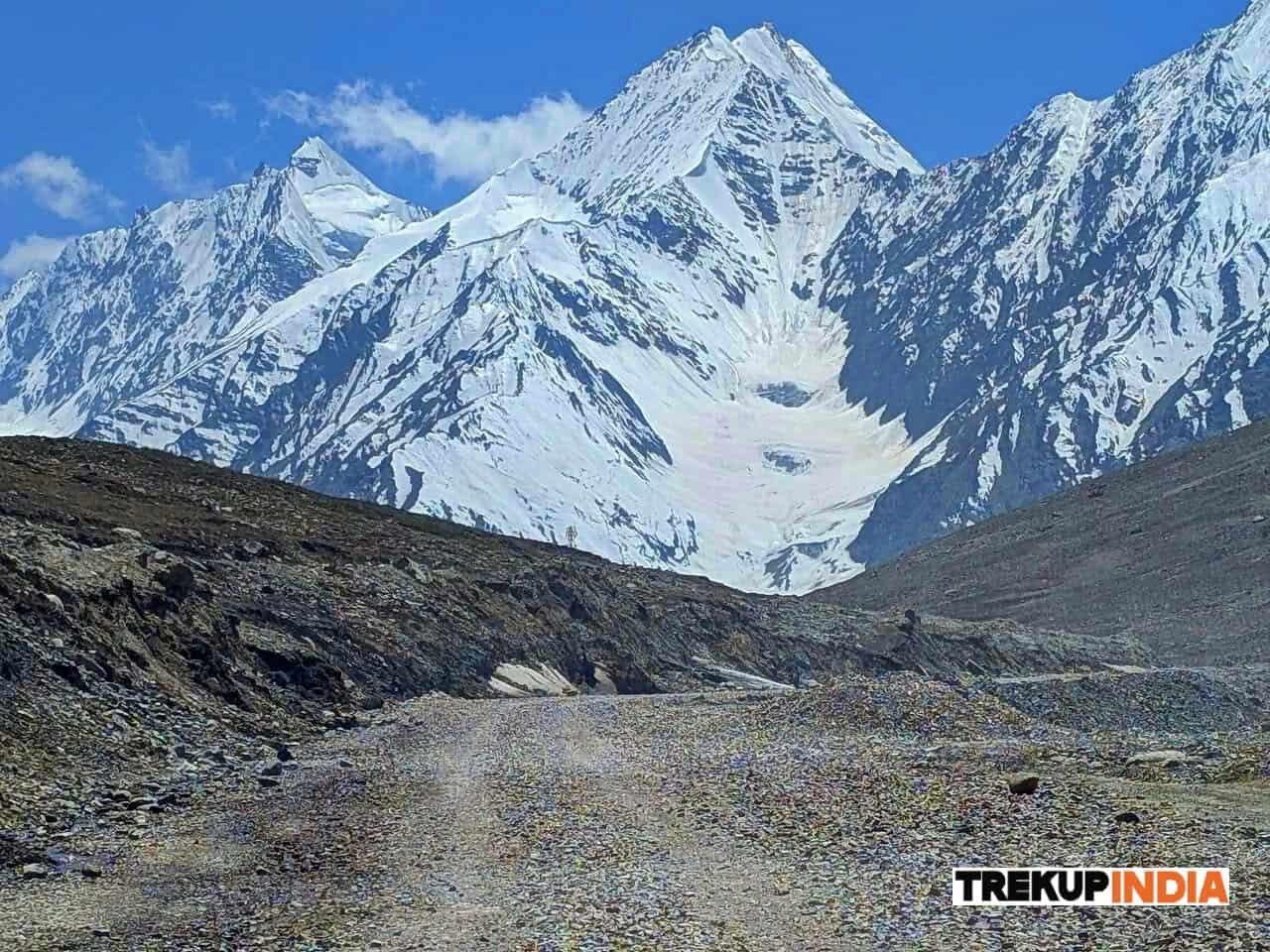
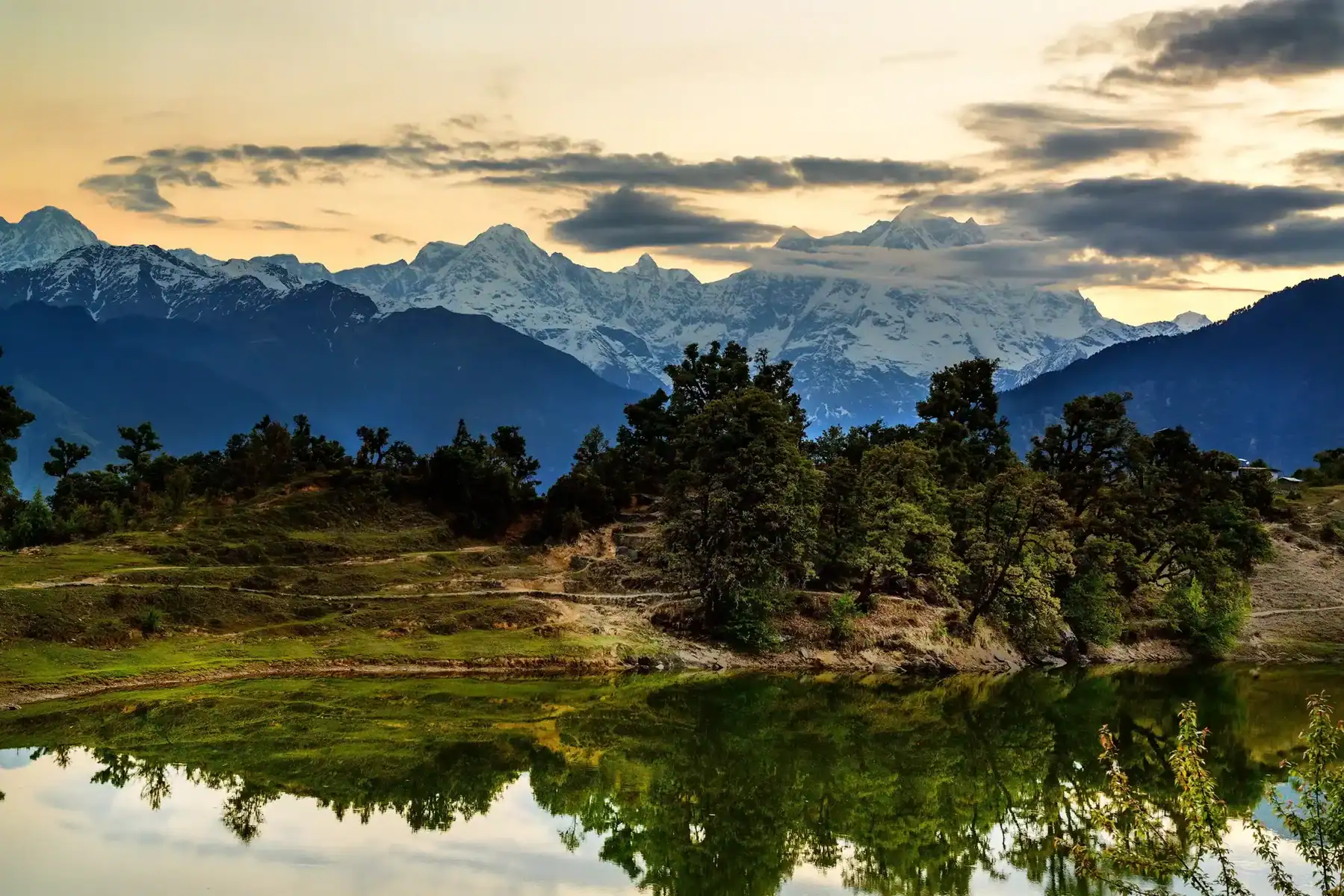
March through April: Clear skies and mountains covered in snow make for excellent peak viewing conditions.
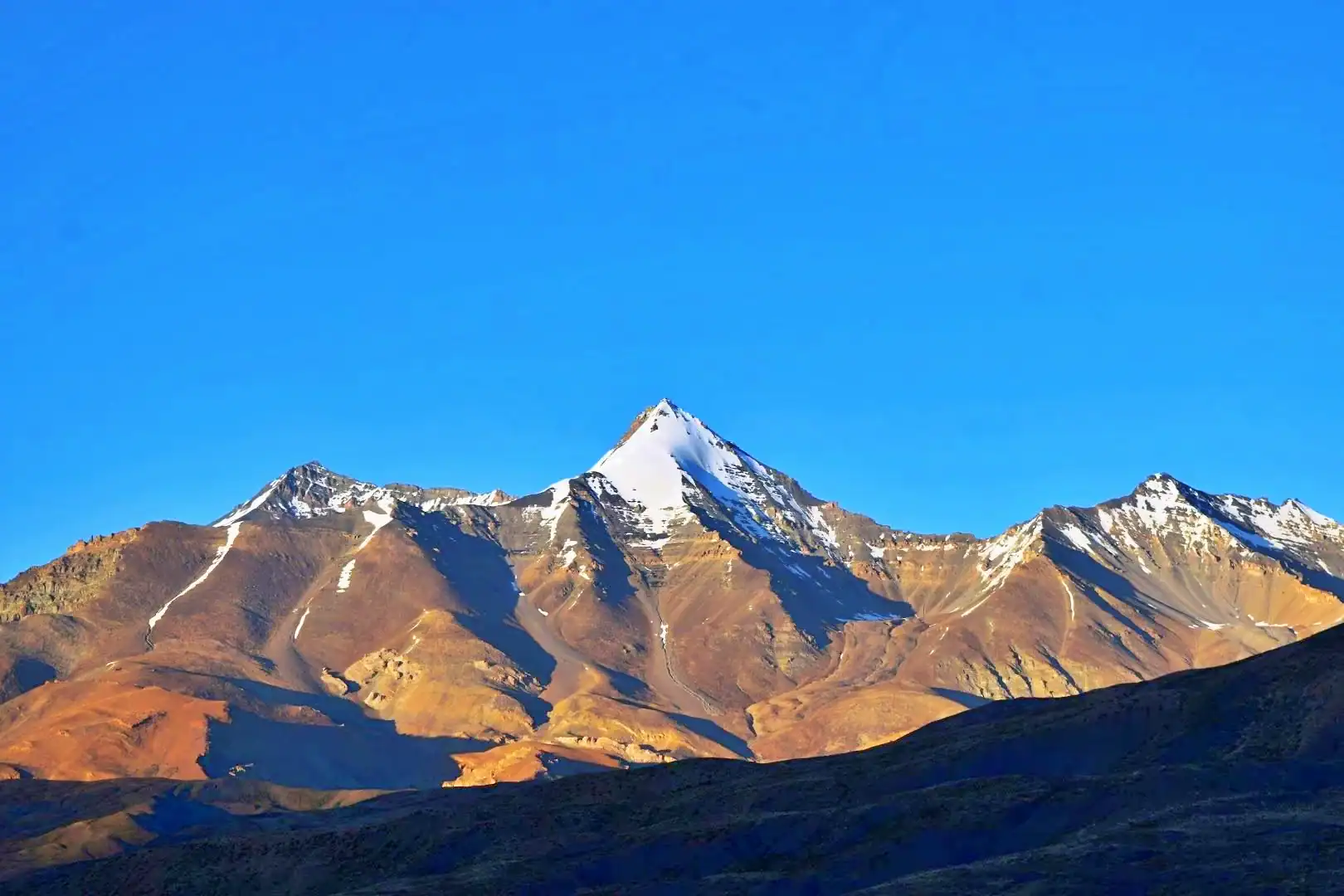
Autumn (September through October): Crystal-clear skies and vibrant landscapes provide spectacular visuals.
Mt. Nanda Devi
Nanda Devi stands as India’s second-highest peak and one of its most striking features. Once considered the world’s highest mountain, this picturesque peak can be found near the Auli Trek start point on day one of your adventure. On their journey through Auli, Nanda Devi Mountain is often the first impressive site they come upon. Named for the Hindu goddess Parvati, after whom it is named, who often goes by this moniker. Nanda Devi, according to Hindu theology, was thought to have come into being as the result of Himavat and Mena of the Himalaya uniting and bearing her children together, so people living nearby venerate her as an embodiment of Parvati, an important protector deity who should be revered as such. Kuari Pass trek traverses the Nanda Devi Sanctuary. This high-altitude valley encased by towering peaks is often referred to as an “Inner Sanctuary”, as its location is considered sacred by both spiritual tradition and ecological conservationists alike. Access is limited to protect both its spiritual significance and delicate environment at this holy site. Regional folklore recounts how Nanda Devi was initially covered with an extravagant necklace of precious gemstones, which ultimately broke free and spread its stones across the Himalayan region, creating more mountain peaks, accounting for their beauty! An impressive legend! This tale gives insight into Nanda Devi’s magnificence and beauty – truly captivating! Nanda Devi stands out amongst other mountains due to its distinct shape, with steep slopes making climbing it difficult.
Mt. Hathi-Ghori Parbat
Altitude of Mt. Hathi-Ghori Parbat varies between 6,727m and 6,708m. Hathi-Ghori Parbat mountain range stands out for its distinct design and appearance, featuring striking similarities between elephant and horse heads. If it isn’t immediately obvious, try turning your head sideways until its appearance becomes evident; when this happens you will instantly recognize its differences.
Mt.Trishul Peak
Kuari Pass offers breathtaking views of Trishul Peak in the eastern sky, which was named in honour of Lord Shiva’s trident. Composed of three distinct peaks, its impressive shape makes an impactful statement about nature’s power when seen from below. As dawn arrives, its snow-covered exterior shimmers pink and gold colours providing trekkers and photographers alike an exquisite scene to photograph or trek on. Furthermore, with its impressive dimensions making this landmark peak an attractive tourist attraction.
Mount Dronagiri
Want to make this trip unforgettable? DUNAGIRI (7,066m) sets the scene as you trek towards Joshimath with its majestic view and unchanging companionship on your trek, culminating in an unforgettable finale. Sanjeevani Booti can be found hidden among its rocks; this site was mentioned in the Ramayana epic poem as possessing life-giving properties and was even mentioned as part of its path!
Mount Chaukhamba
Chaukhamba at 7,138 meters is an expansive range of four mountains which dominates views from the Gelghad campsite on sunny days, but at dawn they take on a picturesque gold hue, creating a captivating scene. Chaukhamba I stands at an elevation of 7138m and forms part of Gangotri Group of Garhwal Himalayan Mountains; summitted successfully in 1952 while Neelkanth can be found within Chaukhamba Massif at an elevation of 6,597 meters; both Neelkanth and Satopanth Glacier border this summit which first conquered several unsuccessful attempts back then by climbers several times since then by climbers!
Neelkanth Mountain
Legend has it that Neelkanth Mountain used to be an open plain used for building Kedarnath and Badrinath Temples – devout pilgrims would travel between them until their actions provoked Lord Shiva to create Neelkanth as an obstacle blocking direct passage between them both. On your trek between Pangarchulla and Pangarchulla summits, you may come across Kamet, Mana, Mandir, Barmatia, or Lampak I and II summits with stunning panoramas awaiting your discovery!
At Pangarchulla Peak, you will also have beautiful views of Mount Trishul (13,359 meters) and Nandaghunti (6,309 meters), although perhaps not quite on par with what Roopkund Treks can provide. Though perhaps not quite comparable with what’s offered during Roopkund treks, these sights are nonetheless make for stunning. Pangarchulla trekking expeditions provide many compelling reasons to join them, with towering peaks as an attraction being one such draw. However, are there additional advantages associated with taking this trek?